
How Storify Was Born
Ideas rarely arrive with fanfare. Sometimes they emerge quietly, after years of watching, thinking, and refusing to be consumed by circumstances that offer little hope of meaningful change.
The beginning of Storify can be traced to two conversations separated by several years.
The first did not sound like the beginning of anything creative. Dr. Suranjita Paul was deeply frustrated by a series of happenings that neither of us could regard as ethical. She repeatedly urged me to intervene. From her perspective, remaining silent seemed unacceptable.
I understood her concern, yet I hesitated. Experience had taught me that correcting entrenched problems is rarely a matter of pointing out what is wrong. It demands patient strategy, careful planning, and, above all, the willingness of influential people to rethink their own positions. Such changes seldom happen quickly. Rather than investing my energy in prolonged confrontations, I chose to devote my time to work that I genuinely enjoyed—projects that could create something positive instead of merely reacting to something unpleasant.
Life moved on.
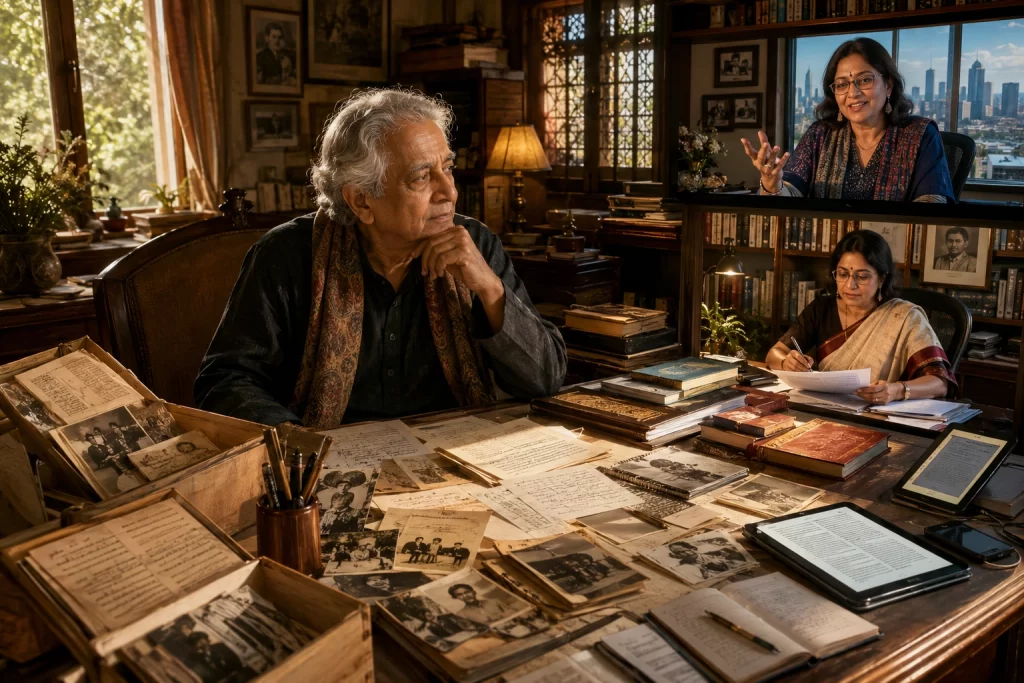
Several years later, an unexpected thought surfaced. Instead of allowing difficult experiences to occupy our minds, why not create something that addressed similar cultural elements in an entirely constructive way? What if we transformed oral cultural history into engaging stories, novellas, and novels that ordinary readers would enjoy? Such a project could become both intellectually satisfying and widely appealing while giving us the pleasure of building rather than opposing.
The idea felt promising, but it needed companions.
I shared it with Dr. Rajeswary Ganguli Banerjee, who had by then moved to Atlanta, and with Dr. Suranjita Paul. Both responded with immediate enthusiasm. What had begun as a single thought soon became a collaborative venture. We started discussing possibilities, refining concepts, examining practical issues, and testing whether the idea could genuinely work.
Then came another important contribution. While discussing the identity of the project, Rajeswary suggested a simple yet memorable name: Storify. The name captured our purpose perfectly—the art of transforming oral cultural history into compelling works of fiction.
The work is still evolving. We continue to develop the concept, examine its feasibility, and improve every aspect of the process. Yet with each step, our confidence has grown. What once began as a response to disappointment has gradually become an independent creative vision.
Today, we believe that the idea of storification has the potential to preserve memories, celebrate culture, and create stories that resonate with readers. That belief continues to inspire us to work harder and carry the project forward.
— Sanjoy Bandopadhyay | Kolkata | July 10, 2026